



Train the Trainer
Gain the skills to confidently deliver and assess professional training.
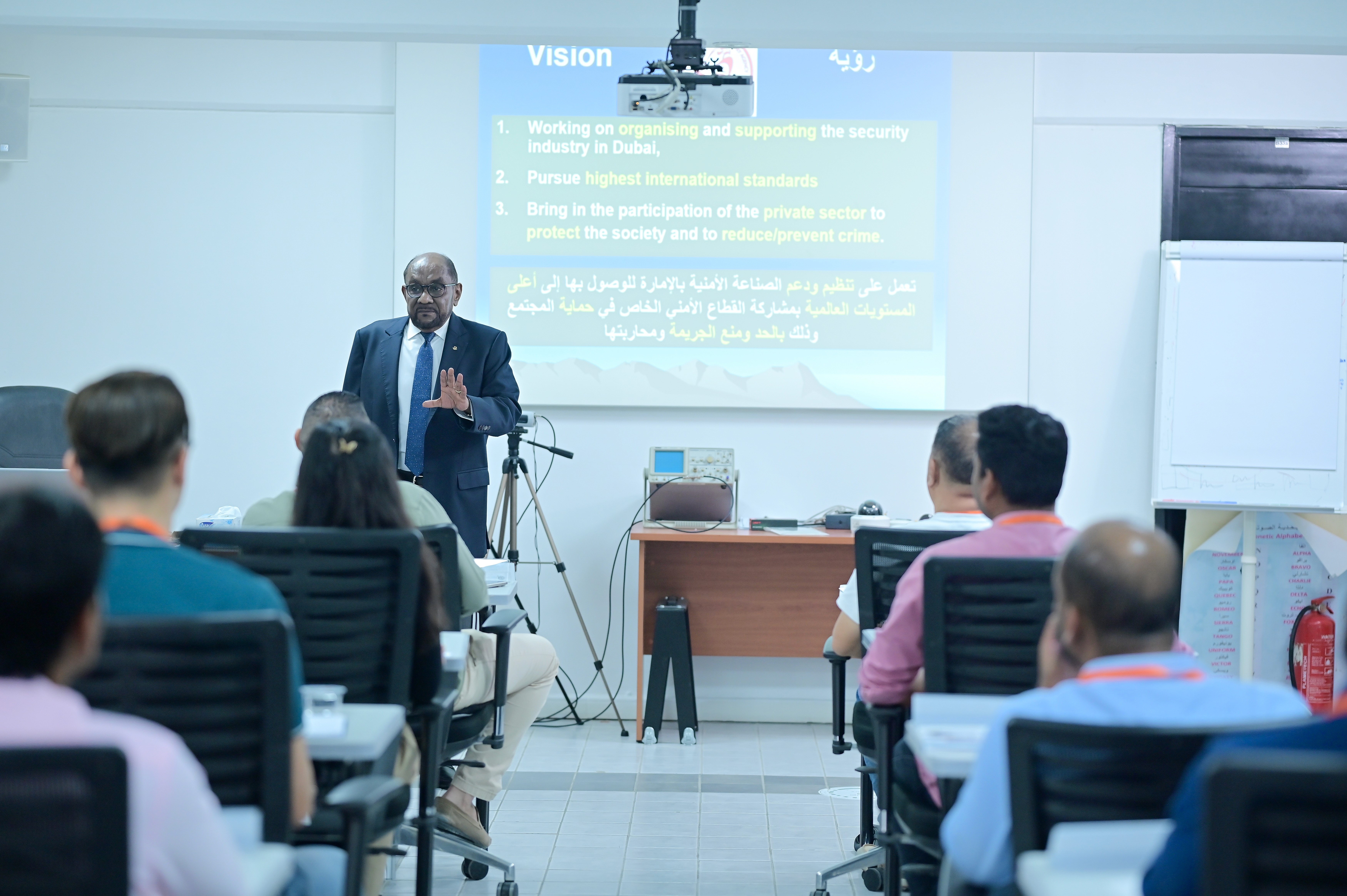
This SIRA-approved course prepares future trainers to deliver engaging, compliant, and effective training, combining practical teaching methods with formal and informal assessment techniques.
Course Fee
Duration
5 days
Language
English
Training Hours
40
Location
Dubai, UAE
Format
In-Person
To register for this course, you must meet the following minimum requirements:
Category | Minimum Requirement |
|---|---|
Education | 2 year diploma (or higher) in any field |
Security Experience | 5 years |
Age | Between 25 and 60 years old |
Other | Certificate of Good Conduct provided by the police service |
Description
Designed for individuals who wish to become certified trainers, this in-person course provides the tools and techniques needed to confidently lead classroom sessions, support learners, and carry out a range of assessment methods.
Participants will explore how adults learn, develop their teaching style, and practise delivering training in a structured and supportive environment. The course also covers how to assess learners formally and informally, using case studies, discussions, presentations, and projects.
By the end of the programme, participants will be equipped to deliver specialist subject content, evaluate learner progress, and meet regulatory and record-keeping standards for professional trainers in the UAE.
Key Topics
Understanding the Training Industry: Structure, roles, and regulatory context.
Beginning the Learning Process: Setting objectives and creating learning plans.
Learning Skills and Styles: Adapting delivery to suit different learners.
Teaching and Learning Methods: Effective approaches for in-person instruction.
Communication with Learners: Building rapport and delivering clear guidance.
Providing Learner Support: Identifying and addressing individual needs.
Teaching a Specialist Subject: Applying instructional methods to your area of expertise.
Evaluation and Assessment: Measuring learning outcomes using various tools.
Formal and Informal Assessment: Observation, questioning, and group tasks.
Additional Assessment Methods: Case studies, professional discussion, projects, and presentations.
Keeping Training Records: Documenting progress and meeting compliance.
Presentation Skills: Engaging delivery and confident facilitation.
Legislative Requirements and Code of Practice: Trainer responsibilities and legal considerations.